In-House vs Outsourced Bookkeeping: Which Is Better?
Choosing between
in-house vs outsourced bookkeeping is an important decision for any growing business. The right choice can impact your costs, efficiency, financial accuracy, and long-term scalability.
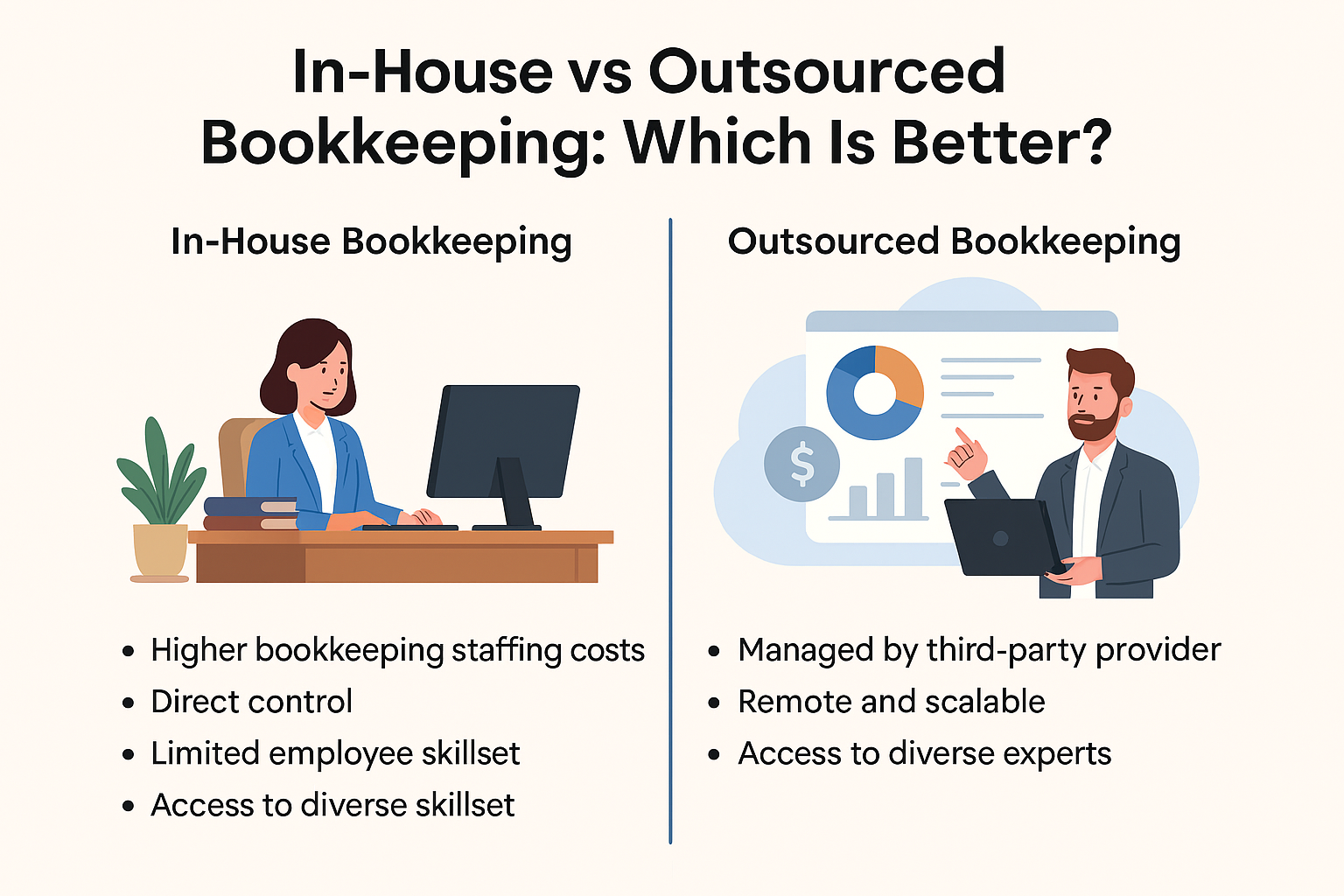
In-house bookkeeping involves hiring a dedicated employee or building an internal finance team to manage your financial records. While this option provides direct oversight and control, it often comes with higher staffing costs, including salaries, benefits, training, and software expenses.
Outsourced bookkeeping, on the other hand, allows businesses to partner with external professionals who handle financial tasks remotely using modern accounting software. This approach can improve efficiency while reducing overhead costs.
What Is Outsourced Bookkeeping?
Outsourced bookkeeping is the process of hiring a third-party provider to manage financial responsibilities such as:
- Recording financial transactions
- Reconciling bank accounts
- Preparing financial statements
- Managing accounts payable and receivable
- Supporting payroll processes
- Assisting with tax preparation and compliance
Most outsourced bookkeeping providers use cloud-based accounting systems, giving business owners real-time access to their financial information from anywhere.
In-House vs Outsourced Bookkeeping Comparison
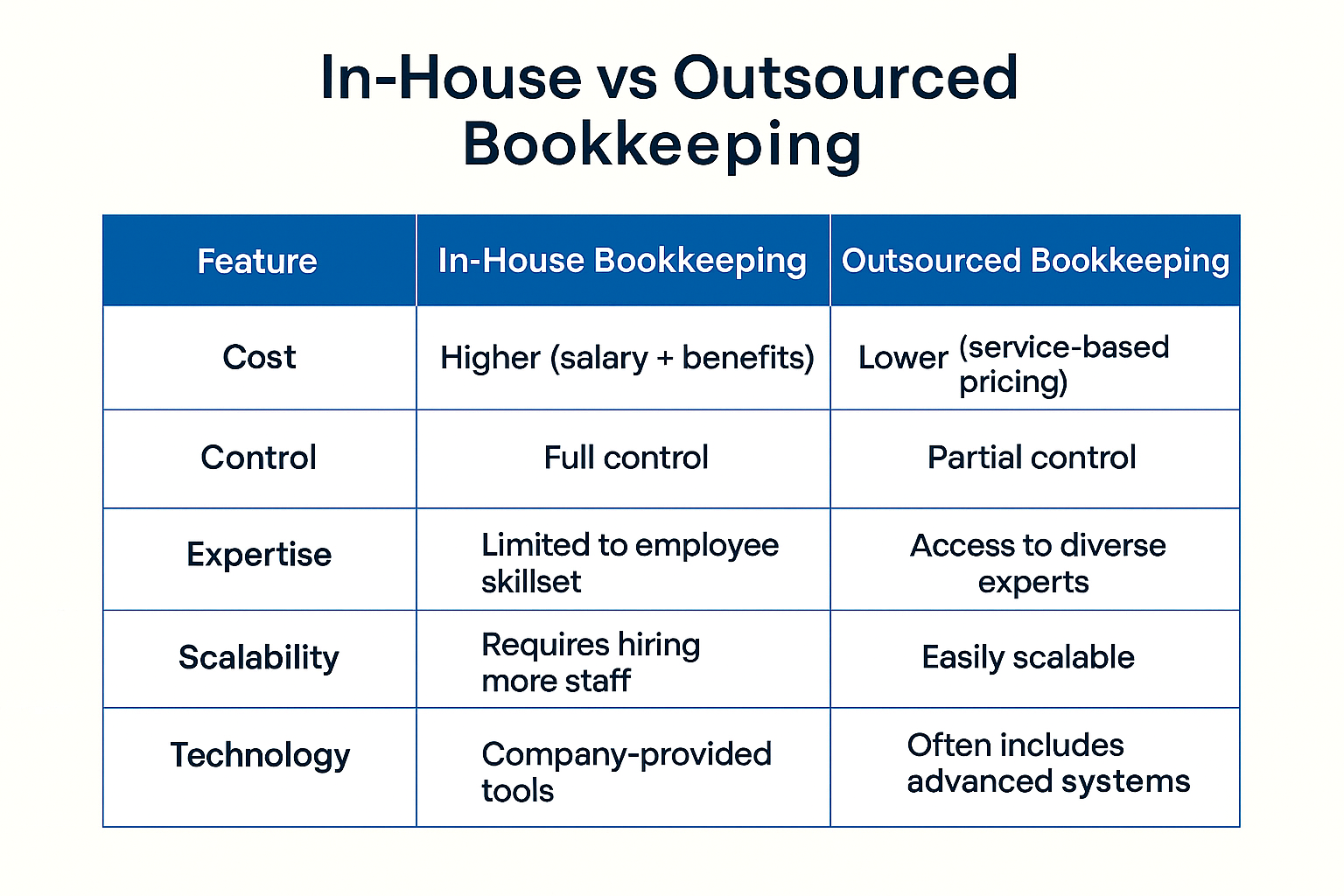
When comparing in-house and outsourced bookkeeping, businesses should consider several factors, including cost, expertise, scalability, and technology.
See the comparison image below for a detailed side-by-side breakdown.
Cost Comparison
 In-House Bookkeeping
- Salary and employee benefits
- Recruitment and onboarding expenses
- Training and development costs
- Accounting software subscriptions
- Office space and equipment costs
Outsourced Bookkeeping
- Predictable monthly service fees
- No employee-related costs
- Reduced overhead expenses
- Access to professional bookkeeping expertise
For many businesses, outsourcing can significantly reduce bookkeeping staffing costs while maintaining high-quality financial management.
Virtual Bookkeeper vs Employee
When deciding between a virtual bookkeeper vs employee, it’s important to evaluate both flexibility and cost-effectiveness.
Virtual Bookkeeper
- Lower operating costs
- Flexible service packages
- Access to multiple financial experts
- Easily scalable support
- No hiring or training requirements
Employee
- Higher long-term costs
- Limited to one person’s expertise
- Requires ongoing management
- Additional employment obligations
This is one reason why many startups and SMEs choose to outsource bookkeeping rather than hire a full-time employee.
How Outsourced Bookkeeping Improves ROI
The decision to outsource bookkeeping or hire an employee often comes down to return on investment.
Businesses should consider:
- Cost savings from reduced staffing expenses
- Time saved on administrative tasks
- Improved financial reporting accuracy
- Reduced compliance risks
- Better cash flow visibility
- More informed business decision-making
By reducing costs and improving efficiency, outsourced bookkeeping often delivers a stronger ROI compared to maintaining an in-house finance team.
Why Businesses Choose Outsourced Bookkeeping
Many companies choose outsourced bookkeeping because it offers:
- Lower operational costs
- Access to experienced professionals
- Improved financial accuracy
- Greater focus on core business activities
- Scalable support as the business grows
- Access to modern accounting technology
These benefits make outsourcing an attractive option for businesses looking to streamline financial management while supporting growth.
Additional Resources
Businesses looking to improve their financial management practices can find useful guidance from
Chartered Accountants Ireland and the
Irish Revenue Commissioners. These resources provide information on accounting standards, tax compliance, and financial reporting requirements.
Choosing between
in-house vs outsourced bookkeeping ultimately depends on your business priorities. While in-house bookkeeping provides direct control, outsourced bookkeeping offers greater flexibility, cost savings, scalability, and access to specialized expertise.
For many businesses, outsourcing delivers a stronger return on investment by reducing overhead costs and improving financial efficiency. Partnering with an experienced bookkeeping provider can help your business maintain accurate records, stay compliant, and focus on growth.
Explore YourTeam’s outsourced bookkeeping services